microsoft
project overview
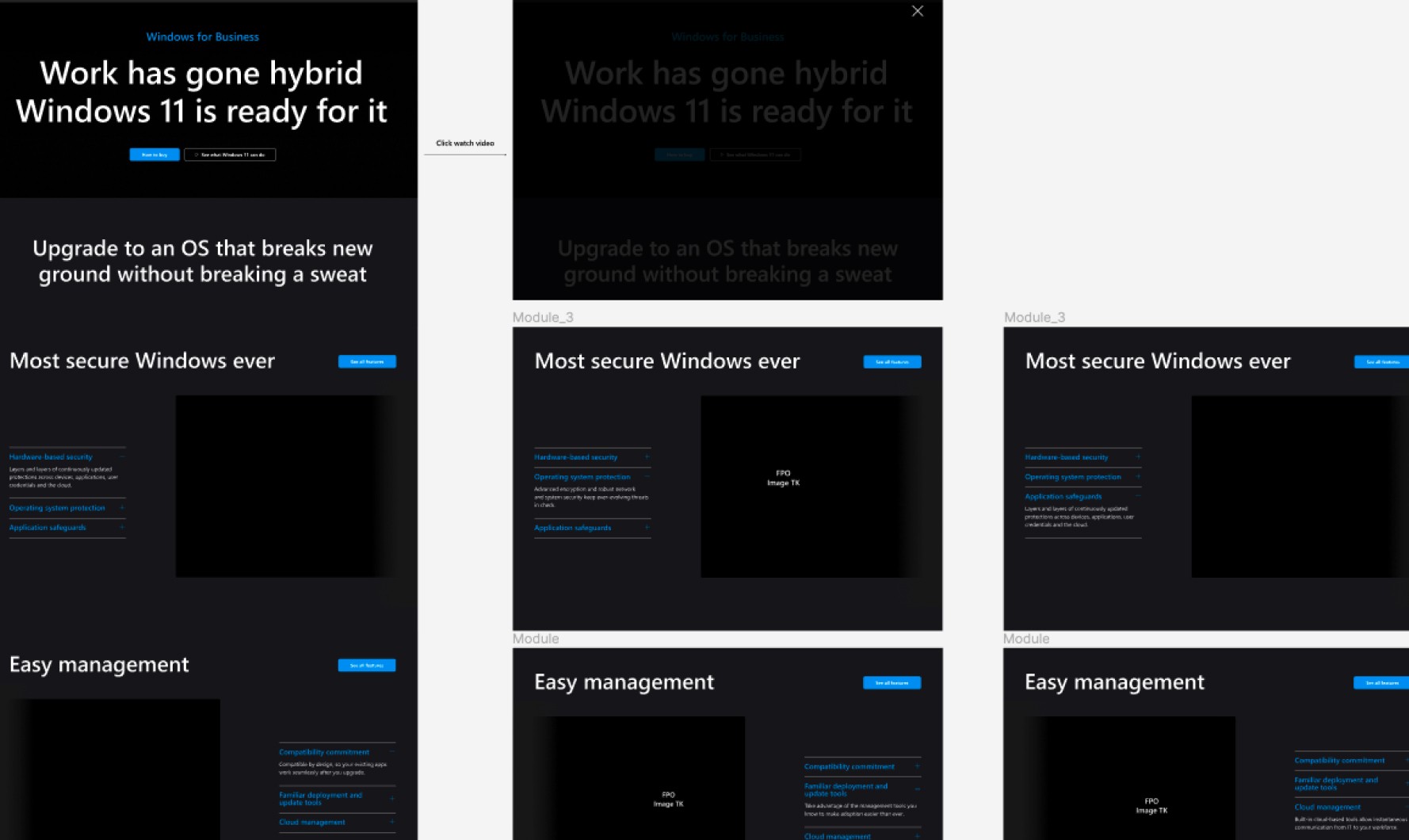
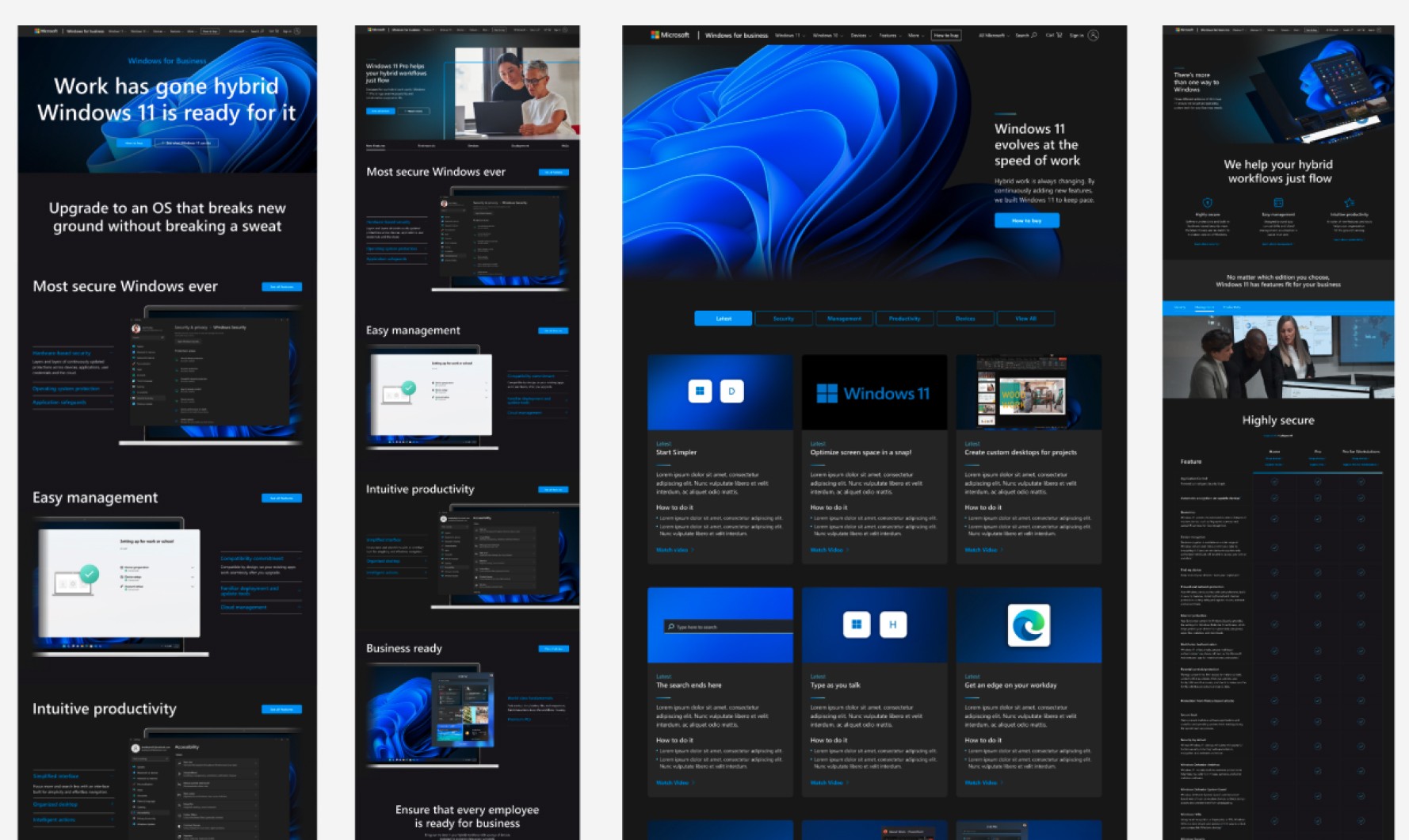
While working at Code and Theory in 2022, I contributed to a website initiative for Microsoft focused on promoting a new Windows 11 device experience. The project required the creation of a fully modular marketing website that could be managed and assembled within Microsoft's Azure-based content management ecosystem. Working alongside a lead designer and cross-functional development teams, I helped design both the customer-facing experience and the underlying component framework that would allow content teams to build and maintain pages efficiently over time.
project type
Website & Module Design
year
2022
my role
ui/ux designer
client
microsoft (agency client)
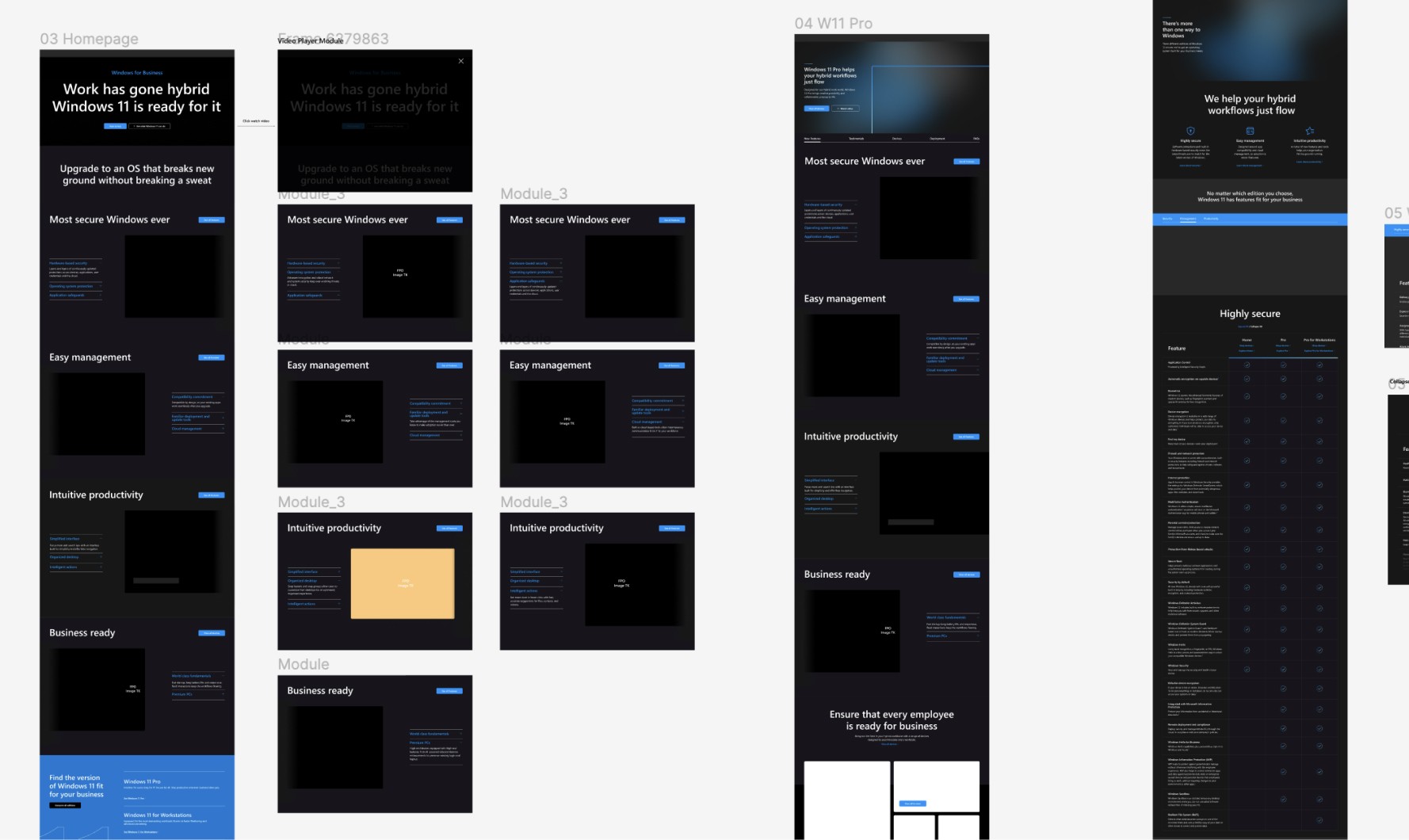
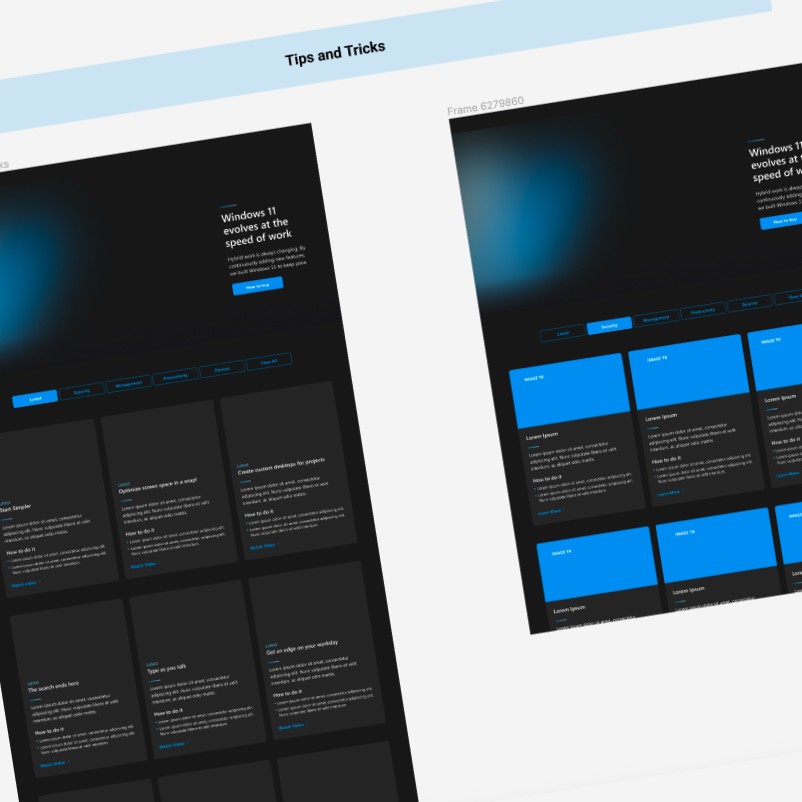
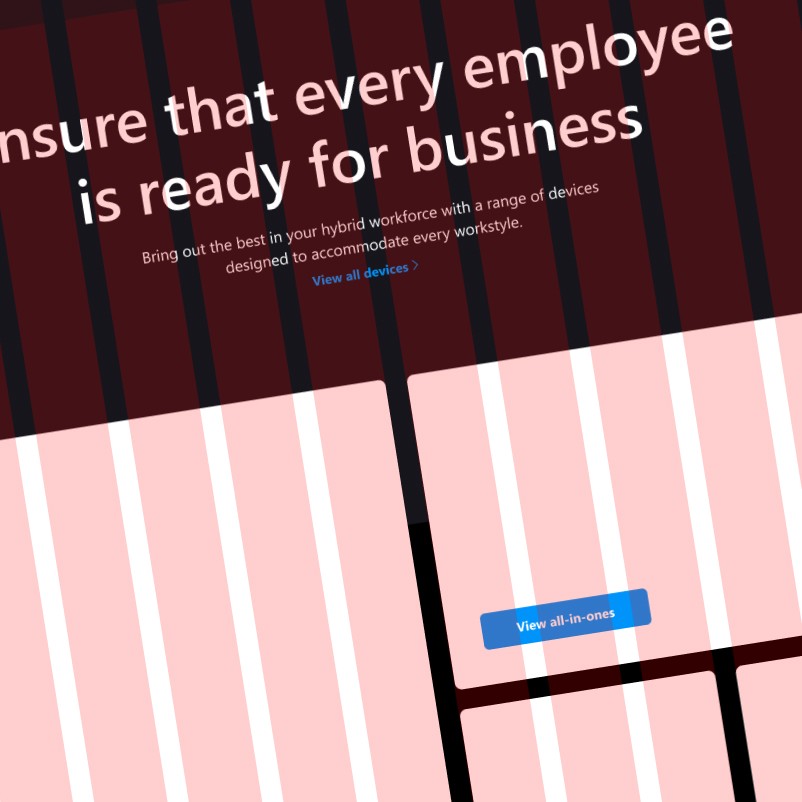
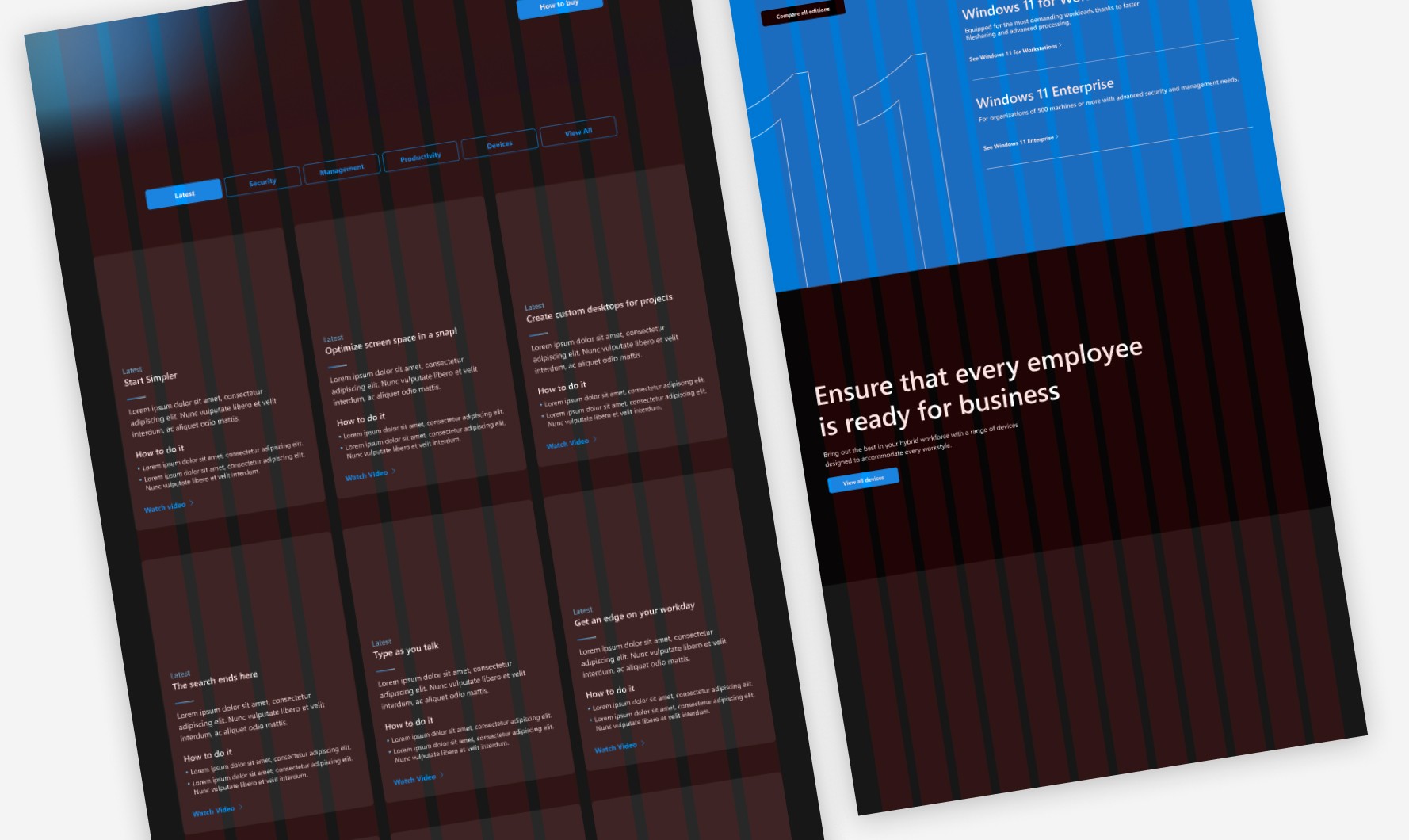
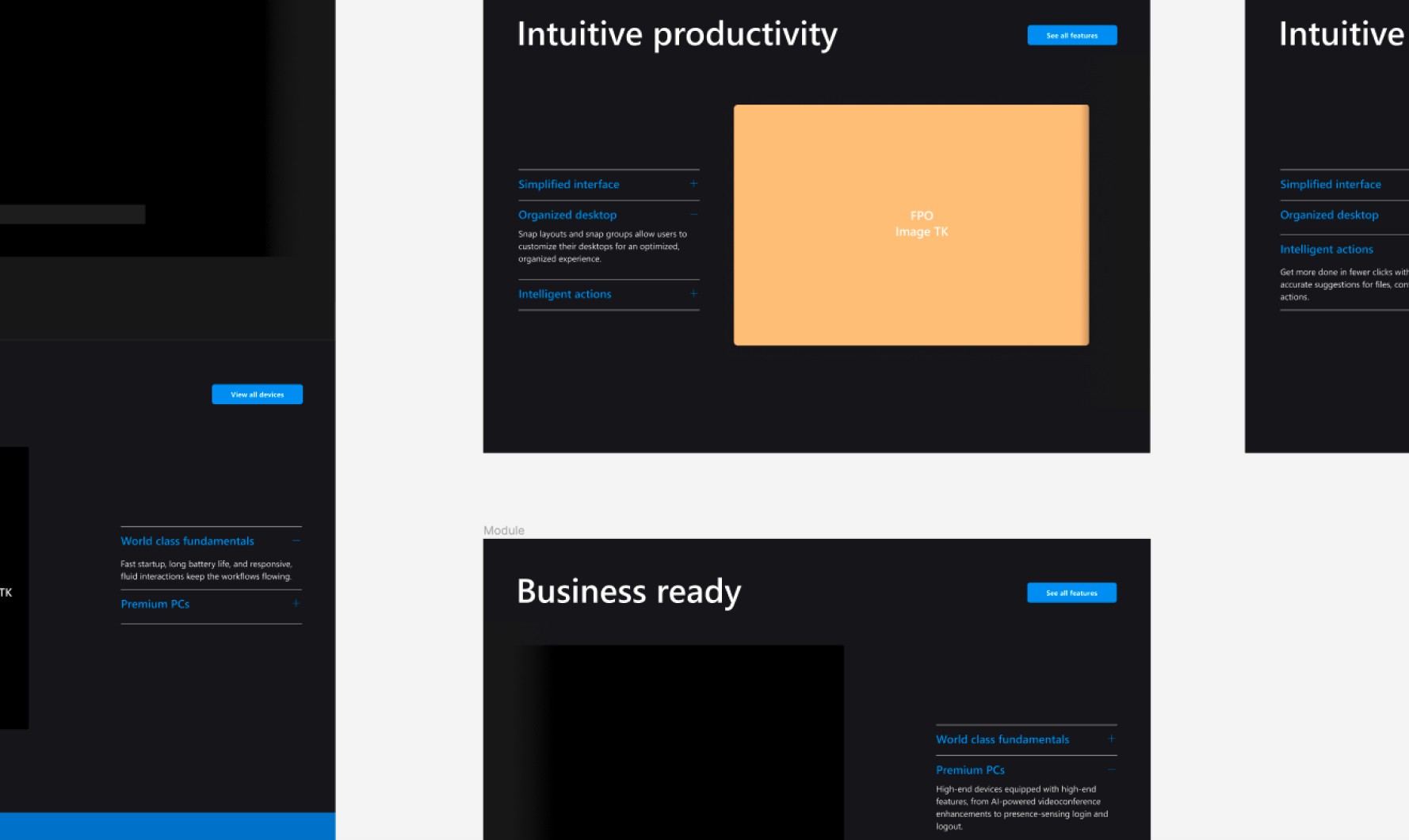
Building a Flexible Modular System A key requirement of the project was creating a library of reusable content modules that could be assembled through Azure's content management tools. The system included a wide range of components such as hero banners, image galleries, video modules, feature callouts, comparison sections, text blocks, promotional banners, and multi-column layouts. Each module was designed to function independently while maintaining consistency across the broader site experience. This approach provided Microsoft with a flexible foundation for creating new pages and updating content without requiring custom design work for every update. Designing Core Product Experiences In addition to the component library, I designed several of the site's primary user-facing pages, including the homepage, Windows 11 Pro product pages, comparison experiences, and educational "Tips & Tricks" content. All designs were created responsively for desktop and mobile experiences, ensuring consistency across devices while adhering to Microsoft's established design language and accessibility standards. The work focused on presenting product information clearly while supporting marketing objectives and user engagement. Collaborating Within Microsoft's Technical Framework Throughout the project, I worked closely with Azure developers to ensure design decisions aligned with the technical requirements of the platform. Particular attention was given to spacing systems, layout grids, responsive behaviors, and content management constraints that influenced how modules would ultimately be implemented. By designing with both content editors and developers in mind, the team was able to create a system that balanced visual quality with practical scalability and long-term maintainability. Final Result The project successfully launched as a fully functional marketing platform supporting Microsoft's Windows 11 product ecosystem. Through a combination of responsive page design, scalable component systems, and close collaboration with development teams, the final solution delivered a flexible framework that allowed Microsoft to manage content efficiently while maintaining a polished and consistent brand experience across the site.